 Elevon in Forbes
Never Miss Your Customers' Buying Moment
A Slovak retail bank wanted to see consumer demand shift in real time. Elevon built a weekly AI radar that scans for rising and fading trends, scores each one, tracks it across its lifecycle, and matches every live trend to a financing product with a ready campaign angle.
Client
A Slovak retail bank
Industry
Banking
Solution
Elevon Platform
Deployment
Production (V1)
Spot the trend. Score it. Match it to a product. Before the competition does.
The Challenge
A retail bank's marketing competes for attention in a market where consumer demand shifts week to week with the weather, the season and the headlines. A heatwave sends people looking for portable air conditioning; summer drives holidays, phones and garden furniture; subsidies pull heat pumps and EVs. Spotting a rising trend early enough to run a relevant financing campaign is the difference between leading the market and arriving once everyone else is already there.
Doing that scan by hand, across price comparators, search trends, e-shops and the news, is slow, inconsistent and never quite current. By the time a trend is obvious to everyone, the window to finance it is already closing.
The opposite risk is just as expensive: pouring budget into a trend that is already fading, where late entry returns little.
Why Elevon
Four queries: desire and fading demand
Every run fires four searches: two for what people want and want to buy now, two for where demand is cooling. The radar catches both the opportunity and the risk in a single pass, instead of only chasing what is hot.
A memory across runs (a ledger)
Every weekly run is written to a ledger, so the suite knows whether a trend is new, accelerating, peaking or fading, and down-ranks the ones on the way down. The radar has a memory, not just a weekly snapshot.
Each trend matched to a product and an angle
For every live trend the suite proposes a matching financing product, an affordability read, a competitor scan, a ready campaign angle and a compliance flag where needed. Marketing gets a brief, not just a chart.
“We used to argue about what was trending. Now we open one radar on Monday and the trends are already scored and matched to a product.”
The Rollout
The suite runs every Monday at 07:00. Four search agents gather desires and declining demand from public sources: price comparators, search trends, e-shops, media and real-estate portals. A scoring agent rates each trend (HOT or EMERGING) and a classifier assigns a lifecycle phase: ramping, peak or declining.
The ledger compares against prior weeks, down-ranks fading trends and labels them runway (DOJAZD) or exit (EXIT). A matching agent pairs each live trend with a bank product and drafts a campaign angle, and a compliance flag is raised for sensitive categories. The result is one dashboard: top opportunities, what to drop, and weak signals.
What this looks like in practice
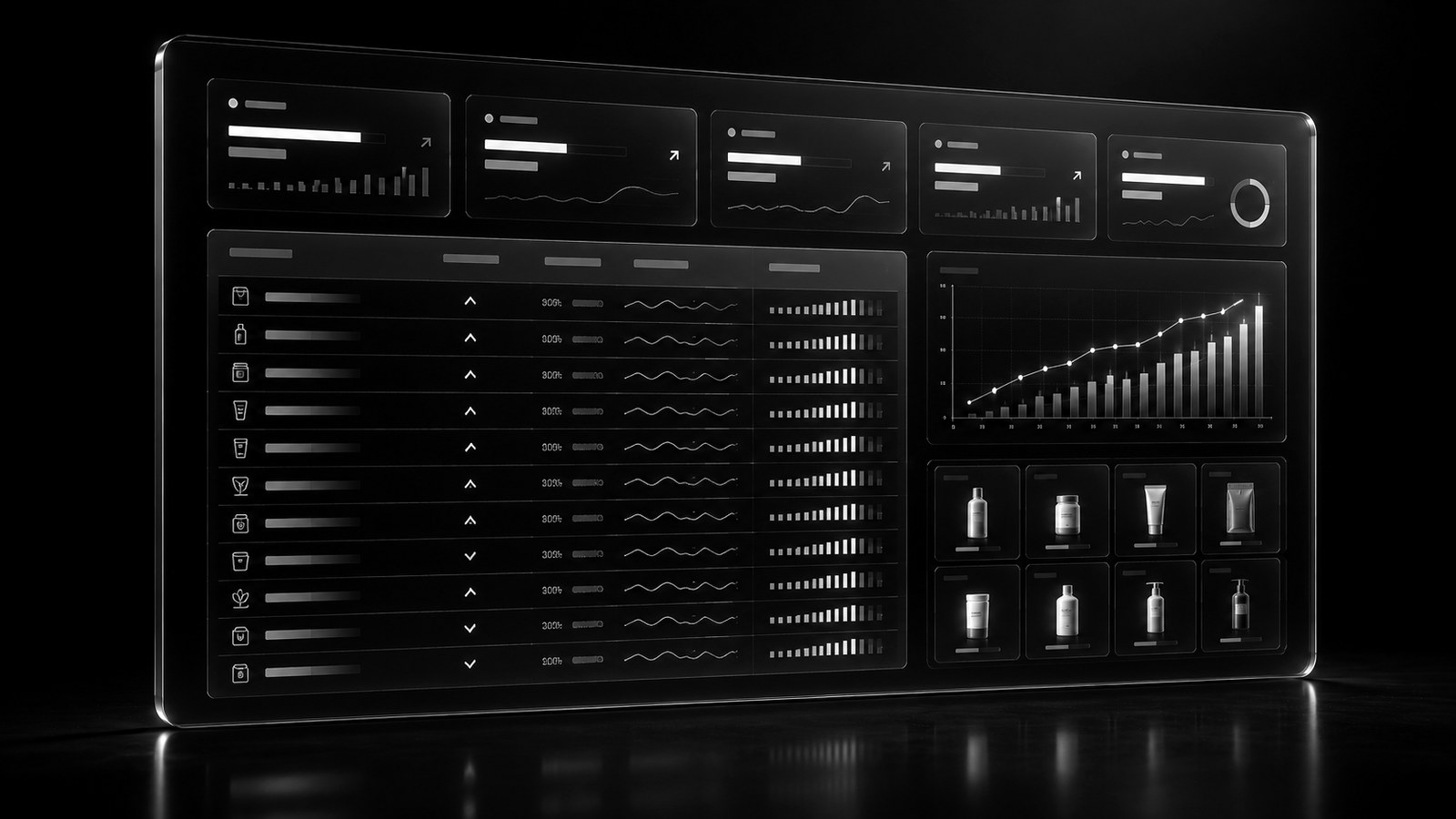
Every Monday the marketing team opens one radar: five HOT opportunities, each scored and matched to a product (a small loan for a portable AC, a credit card for a holiday), a lifecycle strip showing what is ramping versus peaking, a "what to drop" list that flags fading trends as runway or exit, and a compliance flag on sensitive items. The team picks angles and briefs campaigns, instead of guessing what is trending. Demand figures start as an estimate from web search and become exact once live scrapers are connected.
The suite
Sources
Search & scoring
Memory & match
Dashboard
Illustrative reconstruction of the production suite.
Weekly trend radar
Real output format, recreated with blind sample data.
The Results
First to market on a rising trend, while the financing window is still open
Four queries per run cover both rising desires and fading demand
Every trend scored and placed on its lifecycle: ramping, peak or declining
A memory ledger across runs, so fading trends are down-ranked, not chased
Runway and exit labels flag where entering late is risky
Each live trend matched to a bank product with a ready campaign angle
Compliance flags raised automatically on sensitive categories
One weekly dashboard instead of a manual market scan
2–3 wks
earlier entry on rising trends, ahead of competitors
↓ waste
spend steered away from fading demand
5 / week
product-matched campaigns, ready to launch
Where the ROI comes from: catching a trend weeks before it is obvious means campaigns launch while the financing window is open and conversion is highest; down-ranking and exit flags keep budget off fading demand; and matching every trend to a concrete product shortens the path from interest to a signed loan. Numbers above are illustrative, replace with the bank's real campaign and conversion volumes to finalize.
“The value is not just the trend, it is the trend, the product, the angle and the compliance note in one place, ready on Monday morning.”
Why It Worked
Trend-spotting for a bank fails in two ways. Either it is too slow, so by the time a trend is obvious the financing window is closing, or it is too shallow, a list of keywords with no product, no risk view and no action.
The Elevon suite removed both. Four queries catch desire and decline together, so the bank sees opportunity and risk in one pass. A memory ledger turns single snapshots into a lifecycle, so the bank leans into trends on the way up and steps back from the ones on the way down, with runway and exit labels making the call explicit. And matching every trend to a product, an angle and a compliance flag turned a market scan into a ready marketing brief.
Because it runs weekly and remembers, the radar gets sharper every week, and the bank acts on trends while the window is still open.
Want a similar transformation in your organization?
Let's talk about how Elevon can help your team too.
Book consultation