 Elevon in Forbes
A Complete Events and Ticketing App, From Discovery to the Door
Partymaker is a Slovak events app: find a night out, buy the ticket, get scanned at the door. We built all three, plus the organizer admin behind them, on iOS, Android and web. It is live in the App Store and on Google Play.
Client
Partymaker Group
Industry
Events & entertainment
Solution
Custom software (product studio delivery)
Deployment
Live: iOS, Android and web
Delivered in accepted milestones. Running on iOS, Android and web, in four languages, with a ticket that proves itself at the door from its own signature.
The Starting Point
The group organizes events and runs clubs, and depended on external ticketing portals for both sales and data. Renting someone else's checkout means renting the customer relationship with it: no list of your own, no data, no say in how a ticket is sold.
On the data side, every source describes an event differently. Building one catalog on top of them starts with reconciling formats that were never designed to agree.
And a ticketing product cannot stop at the screen. It has to work at the door, at eleven at night, with a queue outside and nobody in the mood for a second attempt.
How We Built It
Delivered in accepted milestones rather than one release, so each piece could go live and be used before the next one started.
One backend, three platforms
iOS, Android and the web run on the same backend with the same logic, so a feature is built once and appears everywhere. The interface ships in four languages from the same content model.
Many sources, one event model
An aggregation layer maps public event data from three external Slovak ticketing sources into a single model, deduplicated and categorized, so the catalog holds one shape no matter where an event came from.
A ticket that proves itself
Every QR code carries an HMAC signature, so its validity is verified from the signature itself, with no lookup into the database. Hardware readers were deployed alongside the app, because a ticketing product that works only on screens stops working at the door.
“A ticket has to validate at the door with a queue outside. That is not a performance target, that is the whole product.”
What Shipped
The platform was built in stages rather than one release. The app and admin base came first, then checkout and the digital ticket, then personalization and check-in, then event aggregation, and finally ticket sales on the group's own account. Each stage went into real use before the next one started.
The public app has been in the App Store and on Google Play since August 2026 and runs on iOS, Android and the web at partymaker.eu, in four languages. Event aggregation from three external sources runs in production behind it, feeding the same catalog.
What this looks like in practice
Event covers arrive in every possible aspect ratio and quality, and the copy runs in four languages. A defined 3:4 cover system with tokens, breakpoints, blur fill for landscape sources, a sold-out treatment and an admin crop holds the layout without a designer touching a single event.
Live in the App Store and on Google Play
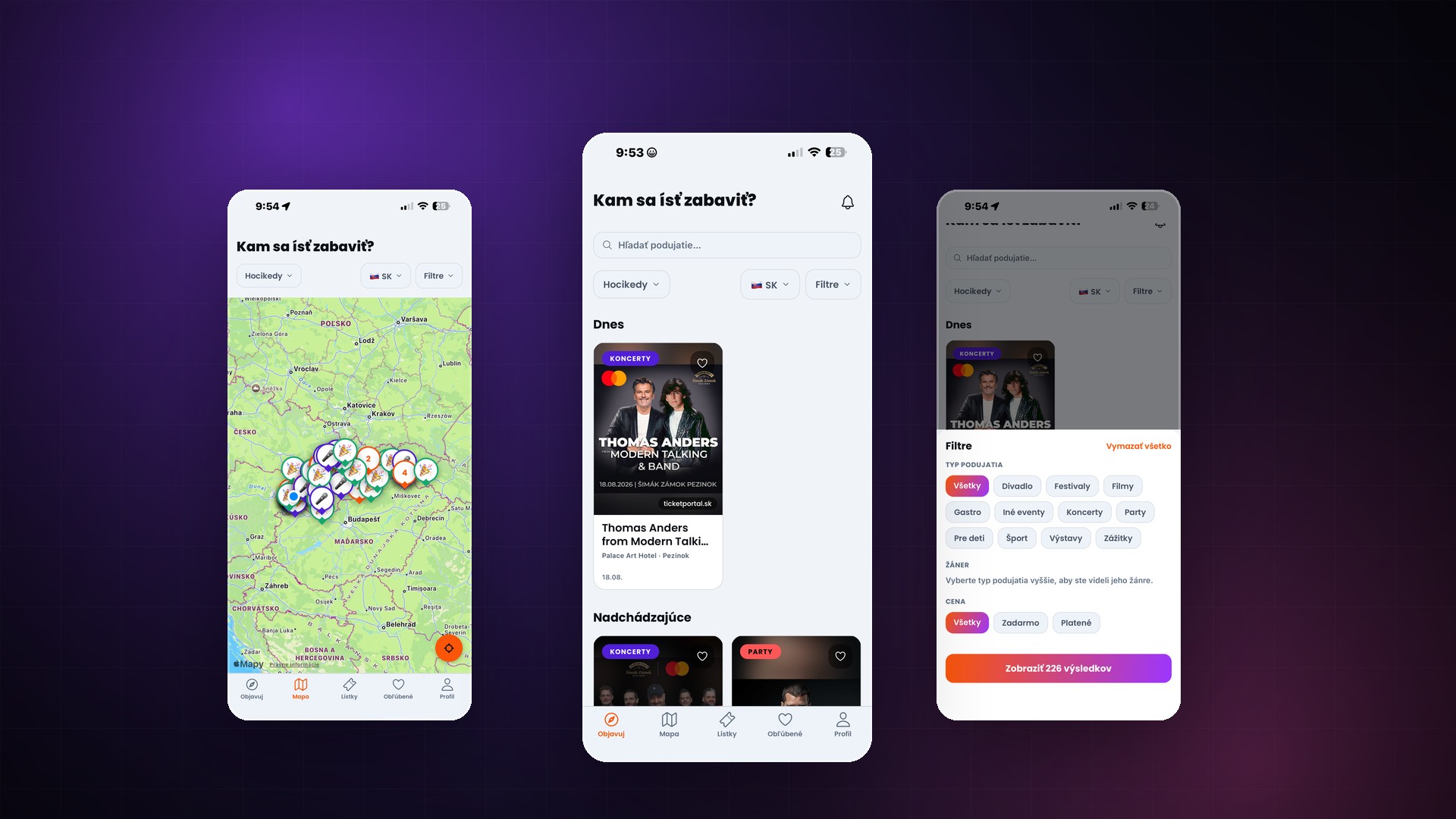
Partymaker is a Slovak events and ticketing app. Events are found in the feed or on the map, a personalized For you section ranks them, venues can be followed, and the ticket lives in the app, in the wallet and in a PDF. It is available in Slovak, Czech, English and German.
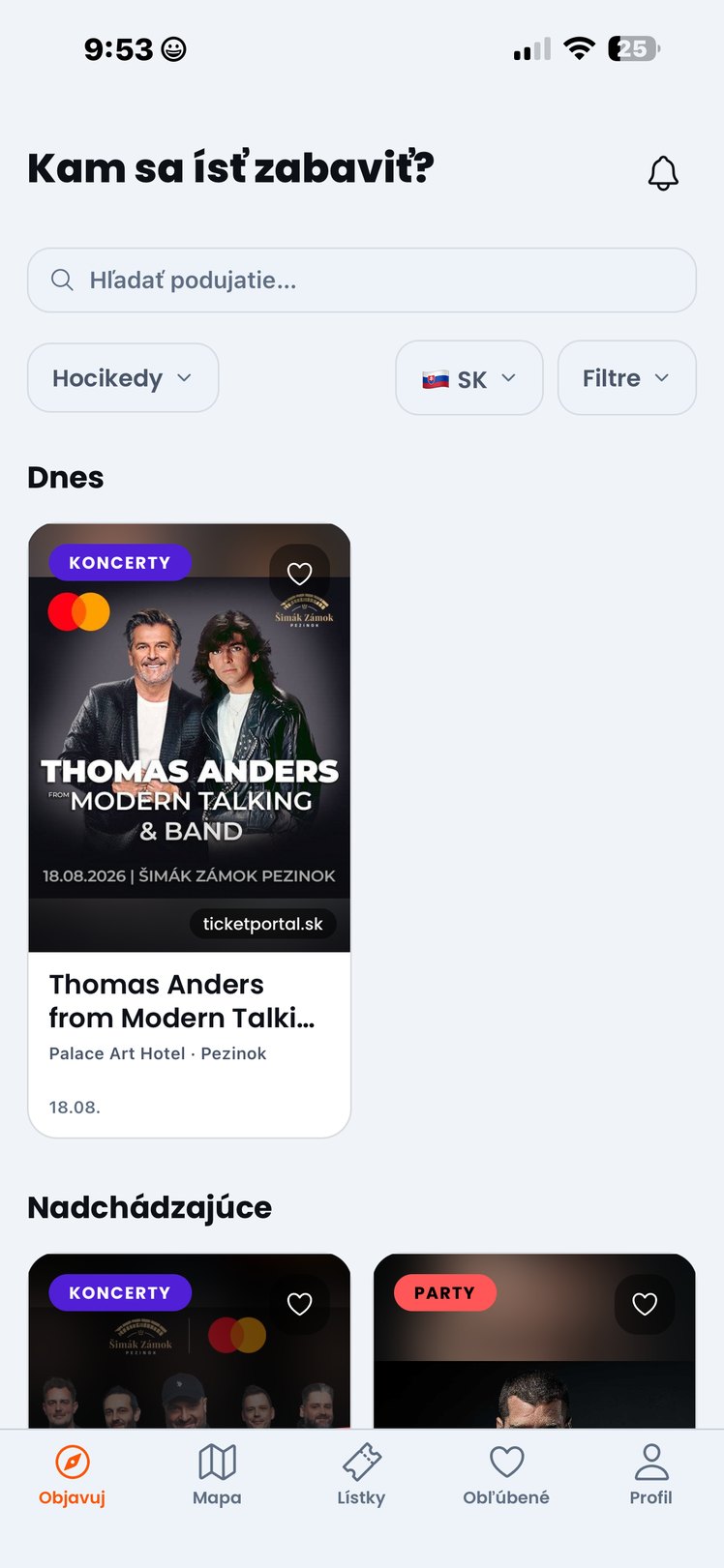
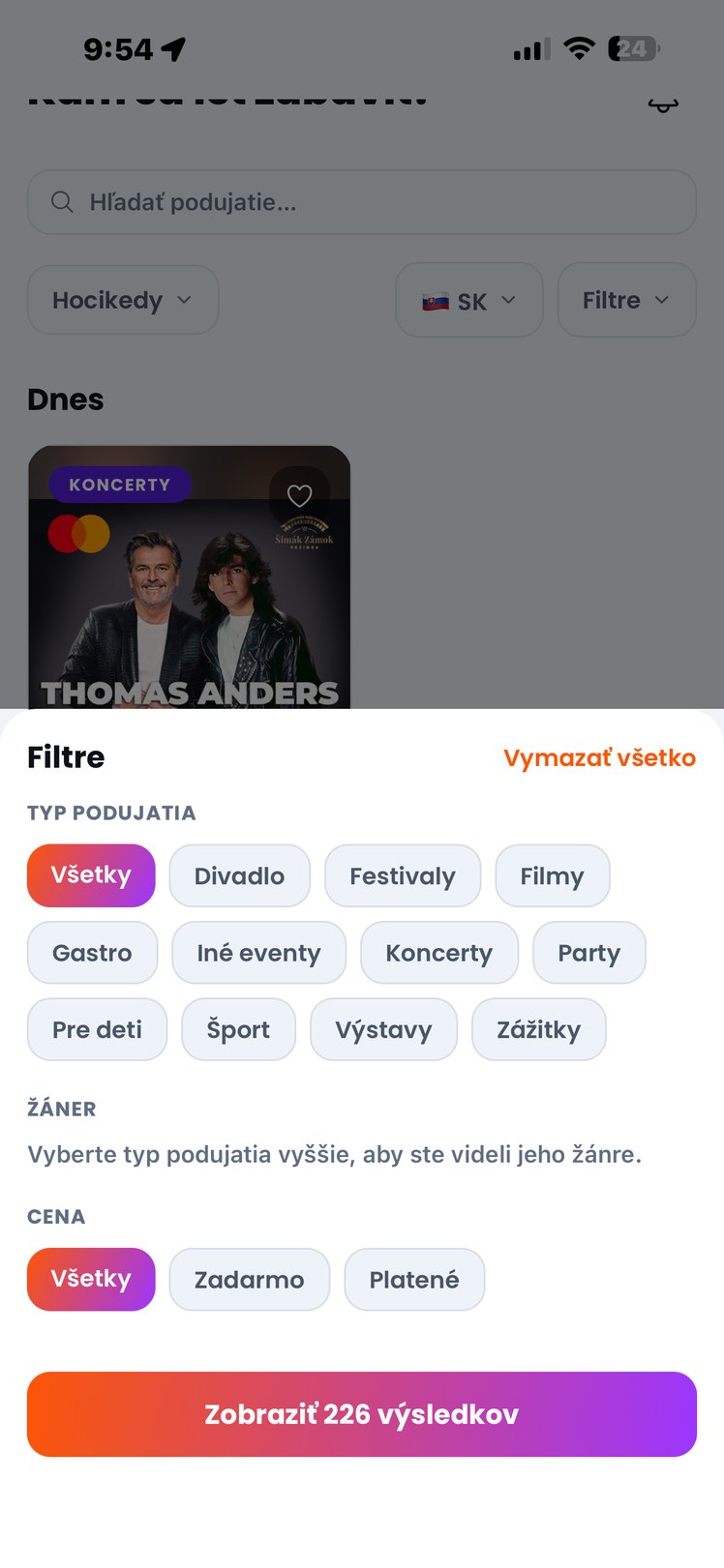
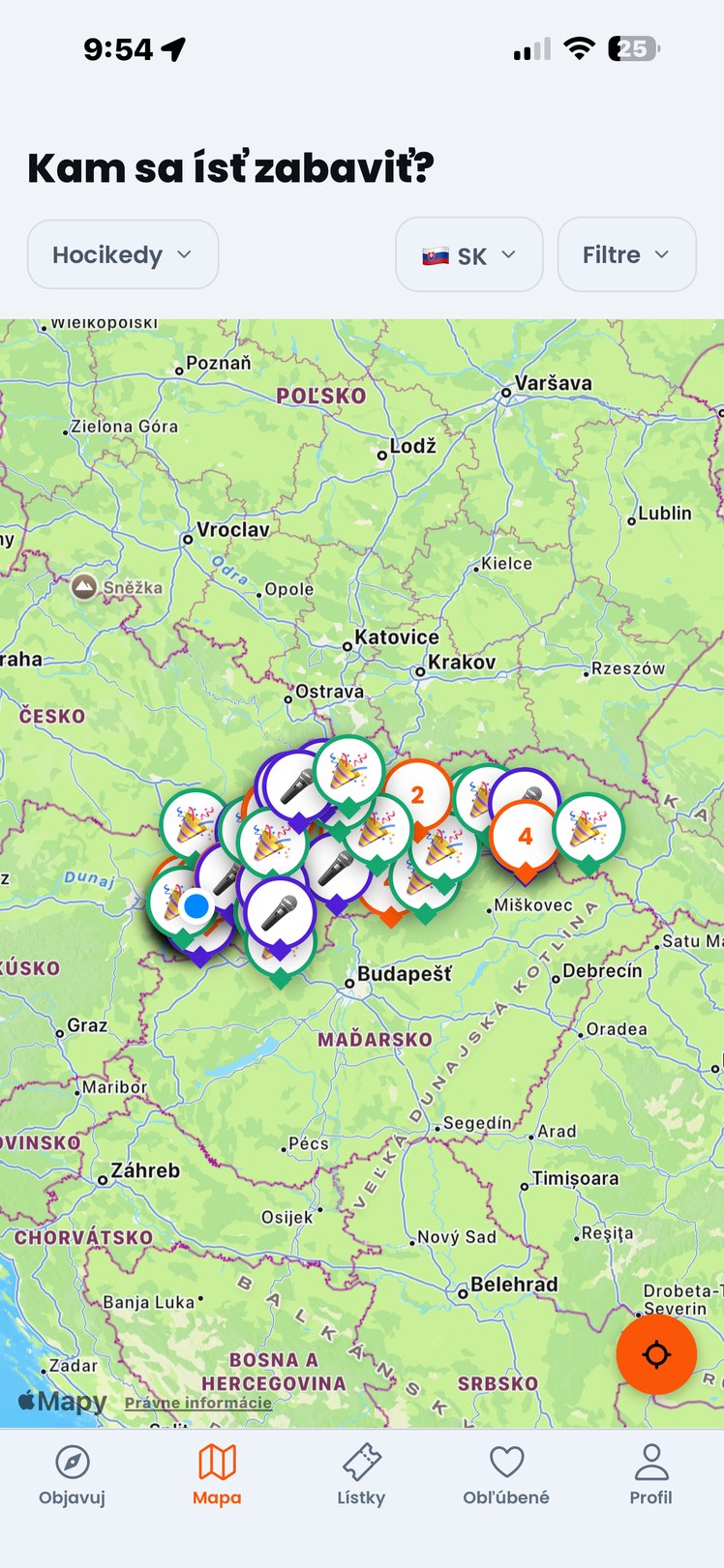
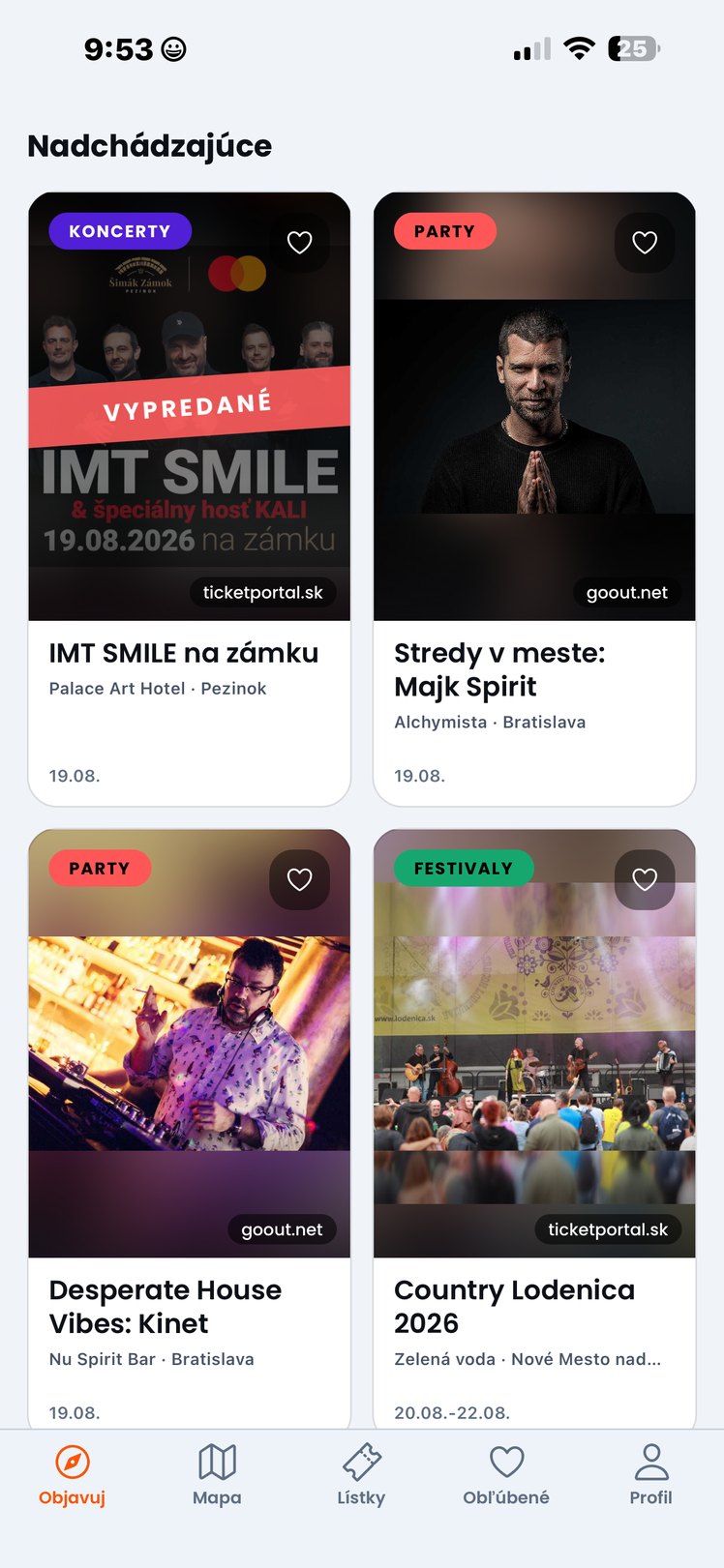
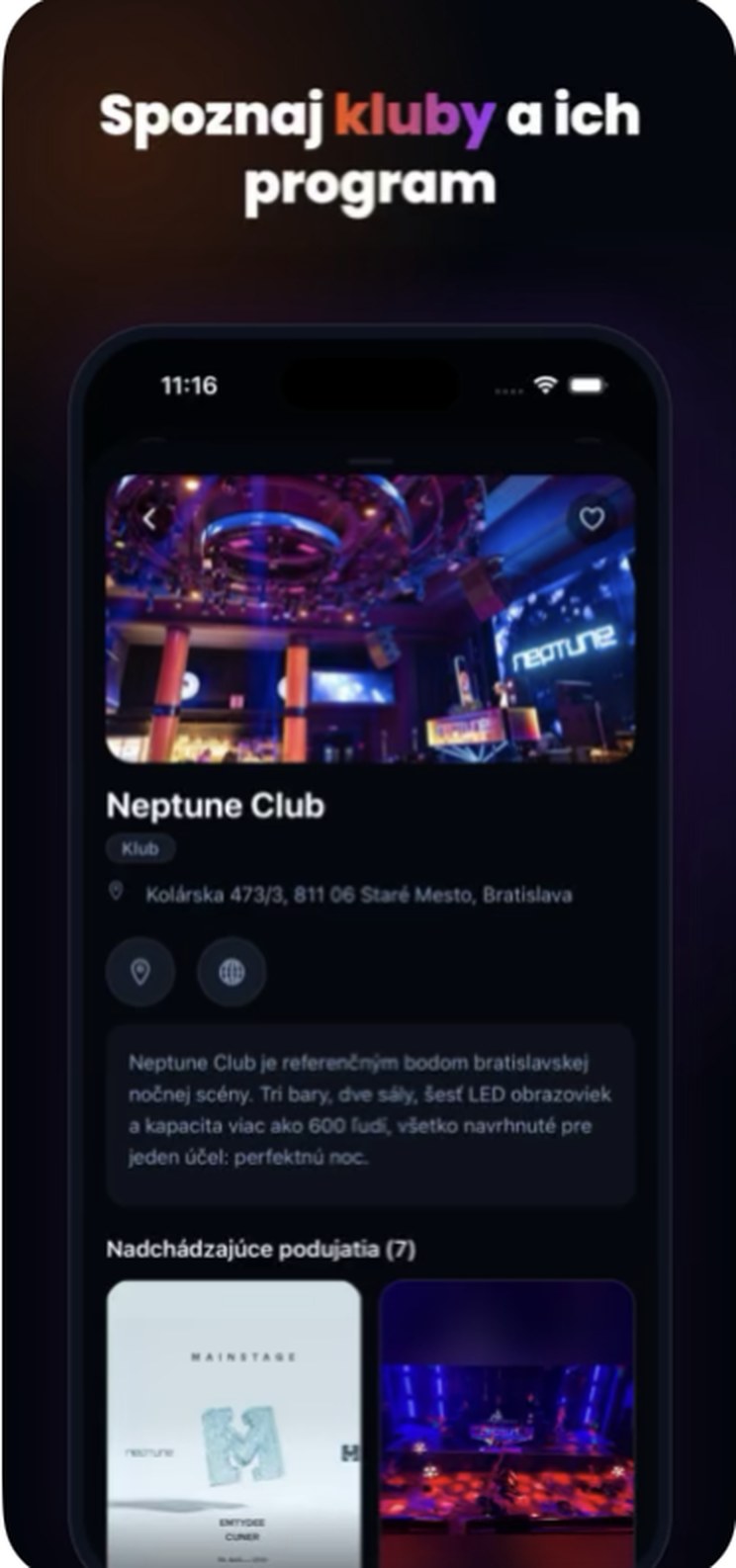
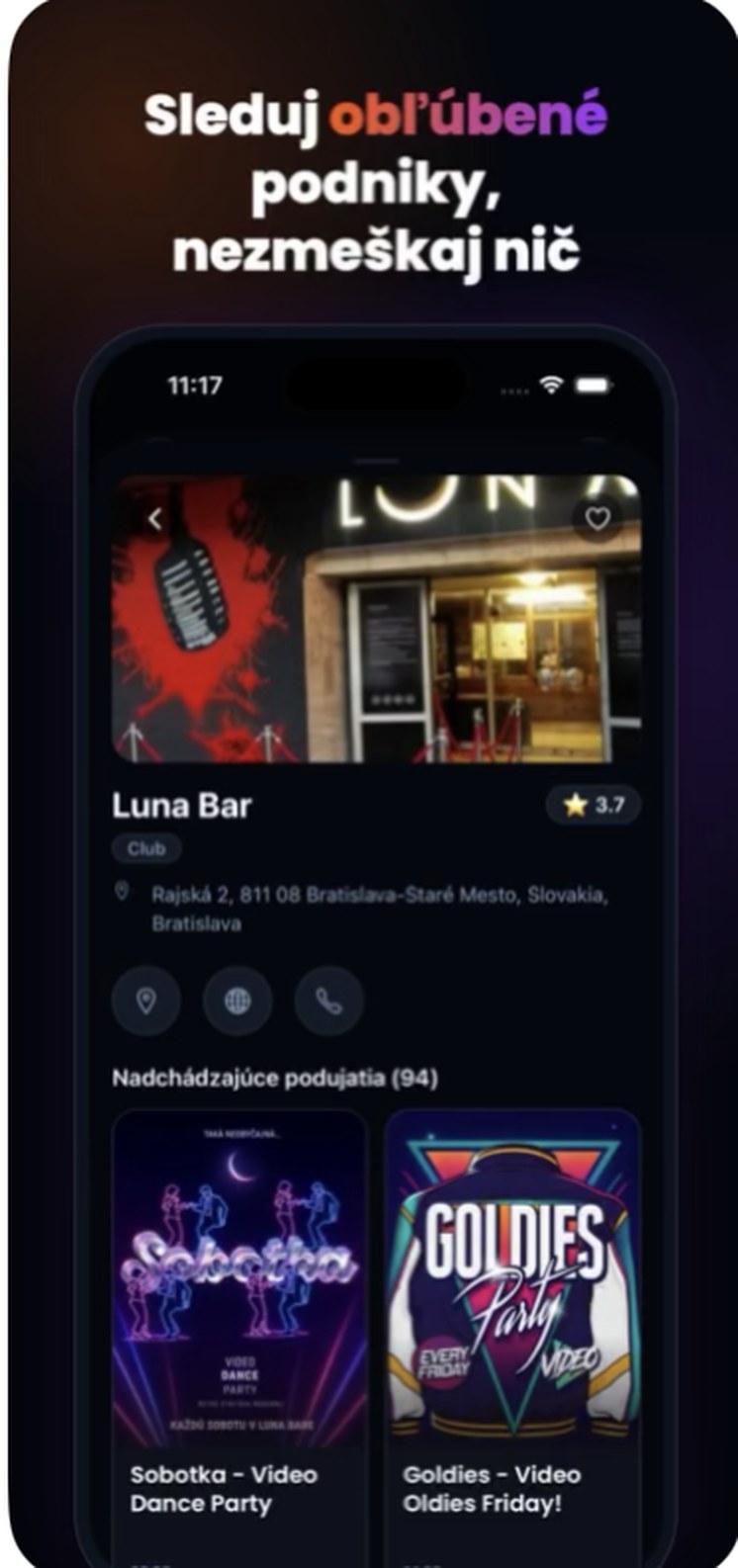
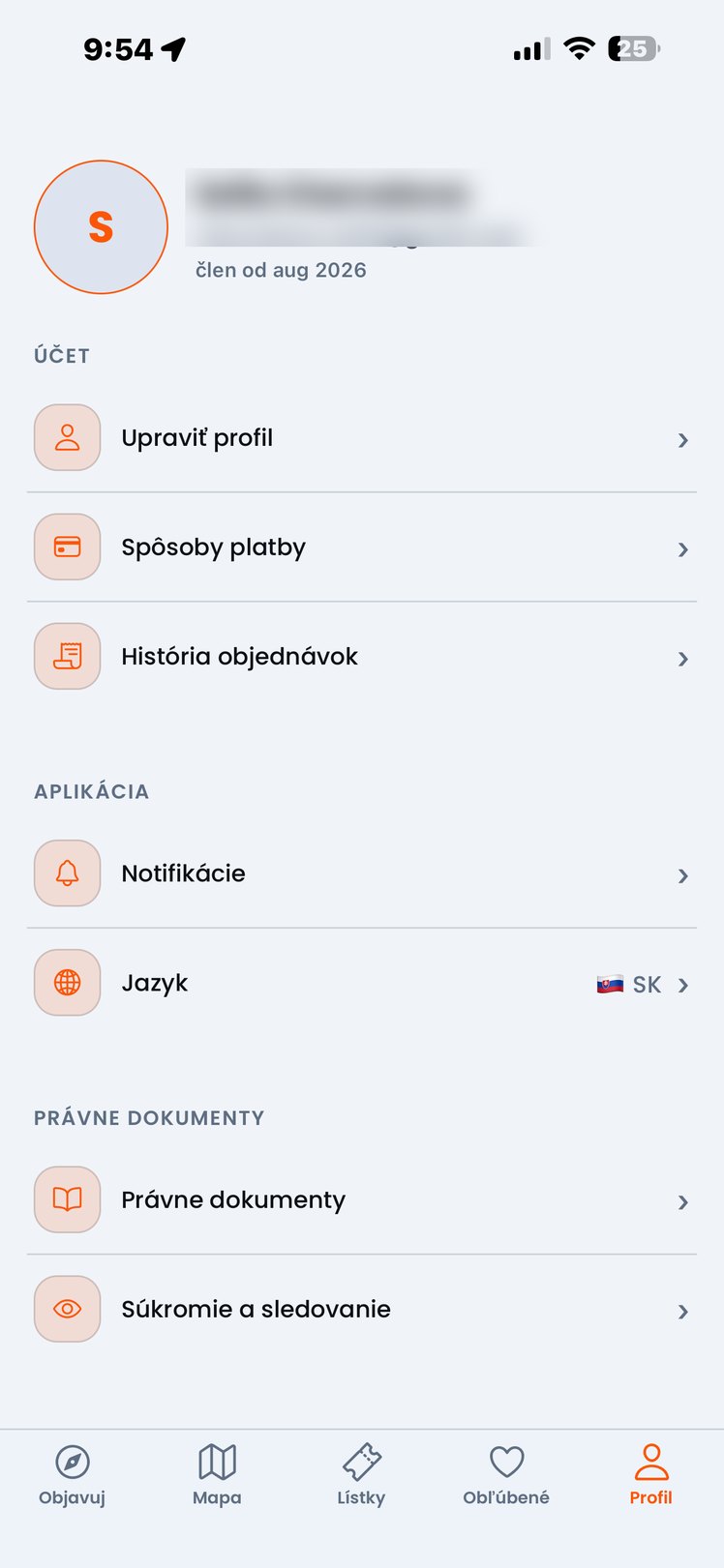
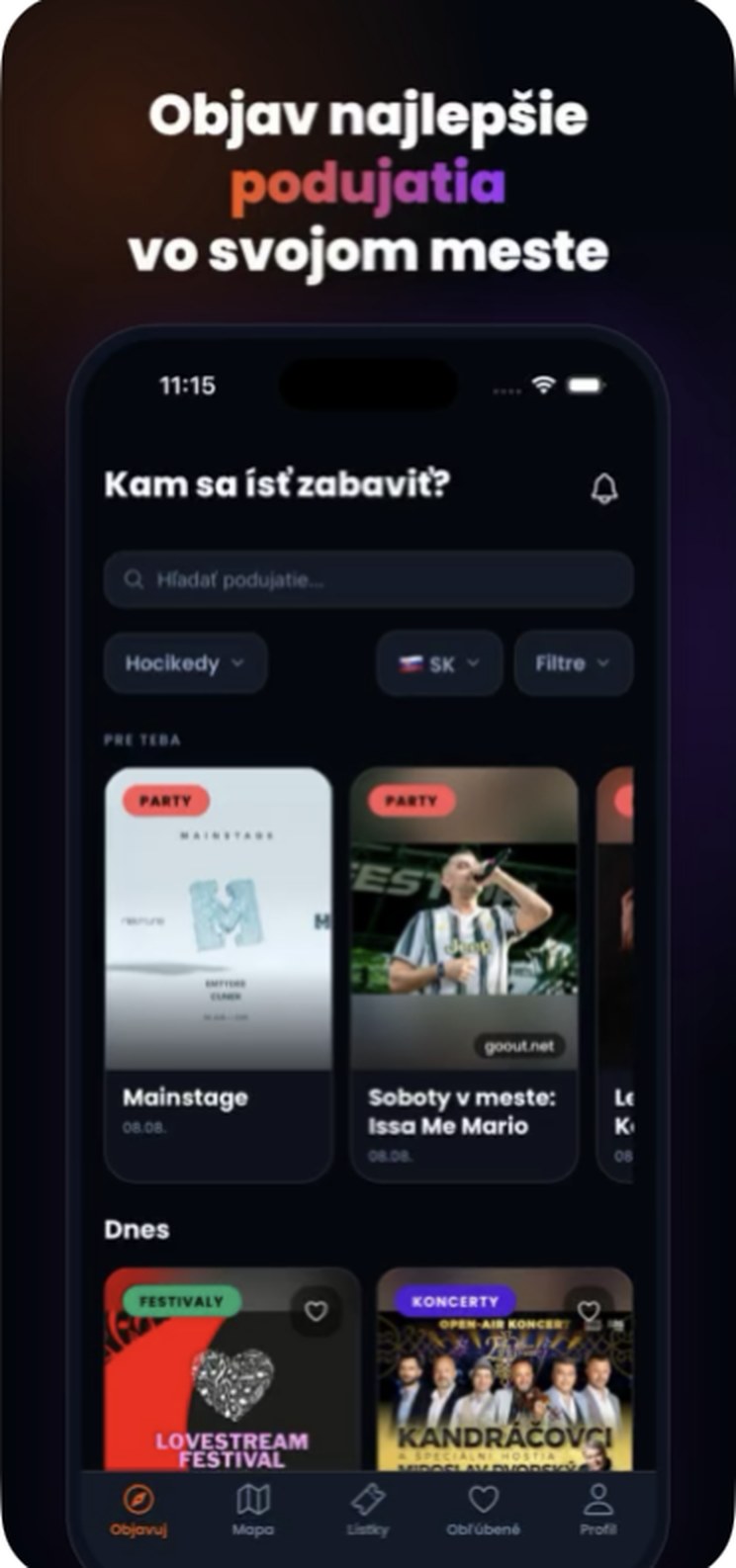
Screens from the released app and the official App Store creatives. Slovak interface, one of four languages.
Everything the platform actually does
Five areas, delivered milestone by milestone and in production today. This is the shipped scope, not the roadmap.
Discovery and personalization
Getting a guest from opening the app to a night they actually want to go to.
- Eleven event types, filterable by genre, city, date and free or paid
- Interactive map with clustered pins
- Full-text event search
- A For you section with a numeric match score, not just a bar
- Music taste editor: genres, formats and preferred time of night
- Watchlist that survives a restart, with an empty state that explains itself
- Venue profiles with description, address, rating and full programme
- Follow a venue and get notified when it announces something
Tickets and payments
The group's own checkout, so the sale and the customer stay on its own platform.
- Ticket tiers such as Early Bird, Standard and VIP, with a running total
- Payment by card, Apple Pay and Google Pay, with card saving
- E-mail verified by a six-digit code before the first purchase
- A hard limit of four tickets per person per event
- Digital ticket with QR, plus Apple Wallet and Google Wallet passes
- PDF ticket by e-mail, re-downloadable from order history any time
- Refunds, bulk cancellation, and inventory released back when a ticket goes
- Reservations that expire on their own instead of blocking capacity
Check-in at the door
The part that has to work at eleven at night with a queue outside and no second chance.
- QR carries an HMAC signature, so validity comes from the signature, not a database lookup
- Accepts the ticket in the app, in Apple Wallet, in Google Wallet, as a PDF on screen and on paper
- Several scanning stations in parallel, sized for around a thousand guests at once
- Hardware readers, so the door does not depend on somebody's phone
- Scan log at a hundred scans a minute and live occupancy against capacity
- Duplicate and foreign codes fail loudly rather than being waved through
- A standalone door-staff app with PIN login, today's events and manual code entry
- Ticket type shown on free tickets so staff can check what a guest holds
Organizer admin
A back office several organizers share without being able to step on each other.
- Event CMS: base info, line-up, ticket tiers and prices, capacity, categories
- Roles and permissions: an organizer only sees and creates its own events
- Publishing reserved for the platform admin
- Changes to a published event go through an approval queue, on a shadow copy
- Push notifications: rich text, segments by city and genre, scheduling, delivery history
- Announcements to attendees, kept admin-only on purpose
- Organizer fee in percent, set per user
- Orders and revenue overview, filterable tables, cover crop with a copyright warning
- Onboarding copy and icons editable without a release
Platform and operations
The layer nobody asks for in a brief and everybody notices when it is missing.
- iOS, Android and web on one backend, with feature parity across all three
- Four languages: Slovak, Czech, English and German
- Event aggregation from three external sources, deduplicated and categorized on import
- Admin curation of imported events: show, hide, feature, assign category and venue
- A 3:4 cover system with tokens, breakpoints, blur fill and a sold-out state
- Versioned legal documents from a single endpoint, with re-consent and a consent audit log
- Consent in three categories, Consent Mode v2 denied by default, iOS tracking prompt mapped to it
- Age gate at sixteen, WCAG AA contrast, 44pt targets, screen readers, 200 percent font scaling
- Cold start under two seconds on an average Android, and a full dry run before going live
Where It Stands Today
This is an ongoing engagement. Below is what is delivered and running today, without commercial figures.
Public app in the App Store and on Google Play, iOS and Android
Own sales channel on own platform, web at partymaker.eu, in four languages
Event aggregation in production across three external sources, normalized into one catalog
Tickets verifiable from the signature alone, hardware readers deployed on site
A documented cover and listing design system, so new events need no design work
Platform milestones delivered and accepted one at a time, each in use before the next began
“Every milestone had to stand on its own in production. That is a harder brief than one big launch, and it is the reason nothing was ever half-built and unusable.”
Why It Worked
The hardest constraint was named at the start rather than discovered late. We knew from the first milestone that the sources would never agree on a format, so the data layer was designed for that instead of being rewritten halfway through.
Milestones were accepted one at a time and each one went into use. The client kept control of scope, and a pause never left a half-finished product that could not be used.
Building the cover system as a system, not per event, is what makes the product scale. Every new event reuses rules that were decided once instead of consuming design time forever.
Want a similar transformation in your organization?
Let's talk about how Elevon can help your team too.
Book consultation